|
Redskins Pulse
|
redskins 2006 review |
Washington Redskins — 2006 Season Review
The 2006 Washington Redskins will be remembered as one of the most fascinating and heartbreaking teams in franchise history.
Washington finished 9–7, a new franchise record for wins, and entered Week 17 with a simple equation: win, and the Redskins were in the playoffs.
Instead, the season ended in heartbreak when star quarterback David Garrard suffered an injury, leaving Washington unable to complete its postseason push.
Yet the story of the 2006 Redskins was about far more than one final game. It was the culmination of a team built around an old-school identity: run the football, protect the quarterback, control the clock, and let a tough, veteran defense do its job.
Smashmouth by Design
Washington's offensive philosophy was deliberately conservative.
Rather than asking Garrard to carry the offense through the passing game, the Redskins leaned heavily on their running attack. Ladell Betts and Labrandon Toefield formed the foundation of the offense, repeatedly pounding away at opposing defenses behind what many around the league considered the best offensive line in football.
Garrard's role was comparatively straightforward: don't make mistakes.
He was trusted to make the necessary throws, extend drives and manage games, but Washington had no interest in turning him into a 35-pass-attempt quarterback. The coaching staff believed the formula was simple — establish the run, protect Garrard, avoid turnovers and force opponents to play Washington's style of football.
It wasn't always spectacular, but it was effective.
The Redskins repeatedly turned games into physical contests, shortening possessions and wearing down opposing defenses. Betts and Toefield became one of the league's more productive rushing combinations, while Garrard's disciplined approach allowed the offense to avoid the kind of mistakes that could derail close games.
Young Stars Take Another Step
Perhaps the most encouraging aspect of the season was the development of Washington's highly touted young talent.
Braylon Edwards showed significant improvement as the season progressed. What had initially been flashes of potential developed into a much more consistent presence in the offense. Edwards became increasingly comfortable making difficult catches and making plays when Washington needed a spark.
The same could be said for Vernon Davis.
Davis entered the season with enormous expectations, and while his development was not instantaneous, there was a noticeable progression throughout the year. By the end of the campaign, he looked far more polished and confident than he had at the beginning.
For a team built around veterans, the emergence of Edwards and Davis provided something Washington desperately needed: a glimpse of the future.
A Defense That Refused to Bend
If the offense was built around controlling games, the defense was built around making opponents earn every yard.
Washington's defense remained tough and physical throughout the season, with a veteran linebacker corps continuing to perform at an extremely high level despite the advancing age of several of its key members. Experience showed up in their ability to diagnose plays, get into position and make the crucial stop when Washington needed it.
The linebackers may not have had the same athleticism they possessed earlier in their careers, but they remained the heartbeat of the defense.
Replacing a Legend
On the back end, Washington had the difficult task of moving forward without Champ Bailey.
His replacement, Jackson, handled the responsibility admirably. Rather than allowing the secondary to become a major weakness, Jackson developed into a reliable contributor and gave Washington confidence that the cornerback position could remain strong.
He was supported by first-round safety Pat Watkins, whose presence gave the secondary another young building block.
The combination of Jackson's development and Watkins' emergence gave Washington reason to believe the secondary could remain competitive for years to come.
Building a Defensive Front
The defensive line also quietly became one of the more intriguing units on the roster.
Washington's interior was bolstered by two big, powerful run stuffers, giving the Redskins the ability to clog running lanes and keep opposing backs from consistently reaching the second level.
The team also added a couple of defensive ends to the rotation, and that move began paying dividends as the season progressed.
Lacasse and Mincey both showed enough to suggest that Washington may have found two players capable of becoming long-term starters.
Mincey, in particular, stood out.
While Lacasse showed encouraging development, Mincey was the more explosive and flashy of the two, displaying the kind of physical tools and playmaking ability that suggested genuine star potential. He wasn't simply a rotational piece — by the end of the season, there was legitimate excitement about what he could become.
That development was particularly important for a veteran defense. While the linebackers continued to lead the unit, Washington was beginning to build a younger defensive core around them.
The Last Ride of an Elite Offensive Line
Perhaps the most bittersweet part of the 2006 season was what it represented for Washington's offensive line.
The Redskins arguably had the best offensive line in the league, and that dominance was central to the team's entire offensive philosophy. The line created running lanes for Betts and Toefield while giving Garrard the protection necessary to operate within the conservative passing scheme.
But Week 17 also marked the final game of that unit as it had existed.
Jon Jansen was heading into free agency, leaving his future with Washington uncertain. Meanwhile, Chris Samuels was expected to be moved to tackle as the franchise dealt with a difficult salary-cap situation.
The financial realities facing the Redskins meant that maintaining one of the league's premier offensive lines together was becoming increasingly difficult.
For all the talk about Garrard's injury and the missed playoffs, there was another realization setting in around Washington:
the team that had finally established itself as a contender was about to change dramatically.
A Historic Season Ends in Heartbreak
The Redskins ultimately finished 9–7, setting a new franchise record for victories.
That record made the ending particularly painful.
Washington had constructed a team that knew exactly how it wanted to win. Run the football. Control the clock. Protect Garrard. Let the young playmakers develop. Rely on an elite offensive line and play disciplined, physical defense.
And it worked.
Right up until the final week.
With a playoff berth within reach, Garrard's injury turned what should have been the culmination of a historic season into a devastating ending.
A Record-Setting Season
For all the attention on Washington's 9–7 record and heartbreaking Week 17 finish, the 2006 season was also one of the most statistically productive in franchise history. Players on both sides of the ball established new Redskins records, underlining just how much talent this roster possessed.
David Garrard had arguably the most notable individual campaign, setting the franchise record for passing yards in a season with 2,949. He also established new Washington marks for passing attempts and passing touchdowns, a particularly impressive achievement given the team's run-first offensive philosophy. Garrard was never asked to win games by himself, but his efficiency and steady decision-making were crucial to Washington's success.
In the backfield, Ladell Betts established new franchise records for rushing attempts with 307 and fumbles with four. The enormous workload reflected just how heavily Washington relied on its ground game. Betts was the workhorse, with Labrandon Toefield providing another physical option behind the league's dominant offensive line.
The development of Braylon Edwards also produced a new franchise record. Edwards caught 63 passes, setting the Redskins' single-season receptions record and adding another chapter to his rapidly growing reputation. His improvement throughout the season was one of the biggest positives for a team that needed its younger offensive talent to emerge.
There was perhaps no more fitting record for Chris Samuels to break than the franchise's pancake record. In what proved to be a parting gift before his eventual departure, Samuels recorded an incredible 94 pancakes, further demonstrating why Washington's offensive line was considered by many to be the best in football.
The defensive side of the ball produced its own record-breaking performances.
Trotter was the heart of the veteran linebacker corps and put together a remarkable statistical season, setting new franchise records for total tackles with 134 and tackles for loss with 17. Despite the age of Washington's veteran linebackers, Trotter continued to play at an elite level and was one of the primary reasons the defense remained so difficult to run against.
Meanwhile, with much of the spotlight understandably focused on new cornerback Jackson, another member of the secondary quietly produced a record-breaking season. Smoot responded to the increased attention with 25 passes defensed, setting a new Redskins single-season record. Rather than allowing the emergence of Jackson to diminish his role, Smoot responded to the competition and expectations with arguably the best ball-disruption season of his career.
Taken together, the records tell the story of a remarkably balanced team.
Garrard, Betts, Edwards and Samuels drove a physical and increasingly productive offense, while Trotter and Smoot led a defense that continued to perform at an extremely high level.
The irony is that despite all those individual accomplishments, Washington's ultimate prize remained just out of reach.
Nine wins. A franchise record. A collection of new individual records. And one final victory away from the playoffs.
The 2006 Redskins didn't lack production.
They simply ran out of season. |
|
Forum Discussion
(by S_Gardiner on 08/17/2026)
|
Replies - 0 :: Views - 6 |
|
NFC East Offensive Scouting Report |
Quarterback
1.  Dallas Cowboys
2.  Philadelphia Eagles
3.  New York Giants
4.  Washington redskins
Analysis: Brees is arguably the best QB in league and gives dallas big advantage over divisional rivals,this will stay this way until brees starts regression,the other guys progress up massively or apolo gets bored and switcghes him to DE .hamdan is improving every season and is getting upto levels you can get excited about great size,age and arm strength.romo in new york is again quietly progressing and should be at taking the team on his back and helping them get more wins,washington finally get an upgrade at QB but at his age and height he wont have enough time to progress to anything more than steady starter,and hes still worse starter in division
Half Back
1. Dallas Cowboys
2. Philadelphia Eagles
3. Washington Redskins
4. New York Giants
Analysis: Dallas gets the nod in running back room as well,they dont have the best half back in the division but they have 2 very good runners that give them depth,westbrook is the premier half back in east but his slight frame you worry if he can keep clear of injury bug as eagles dont have great depth behind him,redskins worst kept secret betts is their most important player with no decent QB play for first 3 years redskins run alot with betts hes progressed to decent starter levels but same as eagles washington dont have great depth behind them.i actually like giants depth at this position barber and pittman are regressing but both still solid performers and blaylock nice mix of speed
Full-Back
1. Washington Redskins
2. Philadelphia Eagles
3. New York Giants
4. Dallas Cowboys
Analysis: Will have to give washington the nod here,but all guys are pretty equal talent wise,just think fuamatamafala suits washington heavy run game and hes great blocker,eagles guy is the better receiving guy in this analysis,stackhouse is big unit and another great blocker,dallas full back slightly more athletic but lesser skills
Wide Receiver
1. Philadelphia Eagles
2. Dallas Cowboys
3. New York Giants
4. Washington Redskins
Analysis:despite having the best WR in the east the rest of the redskins receiver room is full up of steady guys so despite there not being alot between everyone they rank last,giants future looks great will williams and smith developing and also some solid depth behind,dallas has solid compliment of receivers and with colston drafted they add some depth they are full of athletic or physical specimens but actually catching not the highest,eagles have 3 great receivers and solid depth,they win this round.
Tight End
1. New York Giants
2. Dallas Cowboys
3. Washington Redskins
4. Philadelphia eagles
Analysis:Giants have stud shockey manning this spot nothing to not like about this guy except his salary,dallas done it again probably my fav under the radar move this off season grabbing athletic tight end from denver anderson who should excepl with brees under centre,redskins very excited about their young guy but without playing a snap yet cant go any higher on list,eagles managed to secure kranchik whose a solid if unspectacular player
Offensive Line
1. Washington Redskins
2. Philadelphia Eagles
3. New York Giants
4. Dallas Cowboys
Analysis:washington have best oline in league all strong athletic and decent blocking,its close between eagles and giants for next on list but eagles have invested slightly more to upgrade their line ,and dallas with their mish mash of old vets and casts offs will undoubtedly play like all pros
Total Offensive Grade
1. Dallas Cowboys 16 points
2. Philadelphia Eagles 16 points
3. Washington Redskins 14 points
4. New York Giants 13 points
Analysis:no surprises for best offence in the east,2 horse race between dallas and philadelphia,eagles perhaps more rounded roster whilst cowboys split between stars and roster fillers,washington and giants both solid foundations but need their youngsters to develop |
|
Forum Discussion
(by S_Gardiner on 05/17/2026)
|
Replies - 0 :: Views - 9 |
|
washington draft recap |
Washington Redskins 2006 Draft Recap
Youth Movement Begins After Gardiner’s Offseason Gamble
After one of the most chaotic and aggressive offseasons in league history, the Washington Redskins entered the 2006 NFL Draft with a completely different philosophy.
Rather than trying to replace every veteran star lost during Gardiner’s infamous trade extravaganza, Washington focused heavily on securing four immediate-impact players at premium positions while using the later rounds to build cheap depth and long-term roster flexibility.
The strategy made sense.
With the franchise staring at a brutal future salary cap situation and multiple starters approaching free agency in 2007, Washington needed young contributors on rookie contracts who could stabilize the roster financially while still offering upside.
After extensive maneuvering around the draft board, the Redskins targeted impact athleticism early before spending the remainder of the draft hunting for depth pieces and developmental lottery tickets.
Round 1, Pick #14
TE Vernon Davis — Maryland
Attribute Details
Height 6’3”
Weight 254 lbs
40-Yard Dash 4.38
Bench Press 33 reps
Vertical 42 inches
College Maryland
Washington’s first major addition of the draft was local superstar Vernon Davis, one of the most explosive athletic tight end prospects football has ever seen.
After trading Jason Witten earlier in the offseason, replacing elite production at tight end immediately became a priority. Davis not only fills the positional void but gives Washington an entirely different type of weapon offensively.
Initial scouting projections already loved Davis’ athletic profile, but post-combine evaluations reportedly skewed even more favourably inside Washington’s draft room. His combination of size, speed, strength, and explosiveness graded out at an elite level.
The biggest question surrounding Davis remains polish as a route runner and consistency as an in-line blocker, but the upside is enormous. Washington believes Davis has the potential to become one of the league’s premier mismatch weapons.
Round 1, Pick #16
S Pat Watkins — Florida State
Attribute Details
Height 6’5”
Weight 211 lbs
40-Yard Dash 4.41
Vertical 40 inches
College Florida State
Just two picks later, Washington doubled down on athletic upside by selecting Florida State safety Pat Watkins.
Following the controversial trade of star safety Milligan, the Redskins needed range, size, and long-term upside in the secondary.
Watkins offers all three.
At 6’5”, Watkins brings rare physical dimensions to the position alongside elite straight-line speed and closing ability. Internally, Washington’s scouting department reportedly graded him significantly higher after workouts and interviews than they initially had during the college season.
While Watkins still needs refinement technically — particularly in coverage instincts and tackling consistency — the Redskins believe his ceiling could eventually justify the gamble.
Round 2, Pick #3
DE Ryan LaCasse — Syracuse
Attribute Details
Height 6’5”
Weight 265 lbs
40-Yard Dash 4.76
Bench Press 28 reps
College Syracuse
Washington entered Day 2 determined to rebuild depth and long-term stability along both edges of the defensive line.
Ryan LaCasse represented the safer of the two defensive end selections.
Scouts viewed LaCasse as having a strong overall floor thanks to his balanced athletic profile, disciplined technique, and solid football awareness. While his physical upside may not match some elite edge prospects, Washington believes he projects as a reliable long-term contributor capable of playing significant snaps early.
The ceiling may not be spectacular.
But the floor appears stable.
Round 2, Pick #7
DE Jeremy Mincey — Florida
Attribute Details
Height 6’3”
Weight 255 lbs
40-Yard Dash 4.69
Bench Press 26 reps
College Florida
If Ryan LaCasse was the safer selection, Jeremy Mincey was the upside swing.
Mincey arrives in Washington with significantly higher developmental potential thanks to his burst, flexibility, and pass-rushing traits. Coaches reportedly love his natural athleticism, but he remains raw technically and will require careful progression.
The Redskins believe that if Mincey develops correctly, he could eventually become the more impactful player of the two edge selections.
Given Washington’s long-term uncertainty at defensive end following the departure of Ty Warren and concerns surrounding veteran contracts, doubling up at edge made perfect sense.
Round 4, Pick #25
RG Kili Lefotu — Arizona
Attribute Details
Height 6’4”
Weight 330 lbs
College Arizona
This was a straightforward roster-need selection.
Washington needed affordable interior offensive line depth moving forward, and Lefotu brings size, power, and developmental upside as a run blocker.
The coaching staff believes he could eventually develop into a rotational contributor while immediately helping provide cheap depth behind an expensive offensive line core.
Round 5, Pick #11
LT Stallings — Georgia Tech
Attribute Details
Height 6’7”
Weight 310 lbs
College Georgia Tech
With Chris Samuels entrenched as the starter, Washington entered the draft needing developmental tackle depth behind him.
Stallings was viewed as a raw but intriguing project with ideal size and length for the position. He is unlikely to contribute immediately but gives Washington a cost-controlled backup option at a premium position.
Round 5, Pick #23
CB Cedric Griffin — Texas
Attribute Details
Height 6’0”
Weight 204 lbs
40-Yard Dash 4.47
College Texas
After trading Champ Bailey earlier in the offseason, cornerback depth became an obvious long-term concern.
Cedric Griffin represents excellent value in the fifth round thanks to his physicality, tackling ability, and experience playing against elite competition at Texas.
Washington views Griffin as a developmental outside corner with special teams upside early.
Round 5, Pick #25
HB Daniels — Georgia Tech
Attribute Details
Height 5’11”
Weight 218 lbs
College Georgia Tech
With labrandon Toefield’s contract expiring after the season, Washington wanted cheap running back depth moving forward.
Daniels projects as a physical rotational runner capable of contributing on special teams while developing behind the current veterans.
This was viewed internally as a smart cap-management selection.
Round 5, Pick #31
K Matt Prater — UCF
Attribute Details
Height 6’0”
Weight 190 lbs
College UCF
Prater arrives with a strong leg and intriguing upside, but currently projects more as a camp body or potential practice squad stash.
Washington hopes strong coaching and development could eventually produce a favourable skew in his progression.
Round 6, Pick #3
OLB Bobby Carpenter — Ohio State
Attribute Details
Height 6’3”
Weight 254 lbs
40-Yard Dash 4.63
College Ohio State
With their final selection, Washington took a flier on athletic outside linebacker Bobby Carpenter.
Carpenter offers versatility, intelligence, and solid athletic traits, giving the Redskins another developmental defensive piece who could initially contribute heavily on special teams.
At this stage of the draft, Washington viewed Carpenter as excellent value.
Overall Draft Assessment
This draft perfectly reflected the new direction of the franchise.
Washington focused early on acquiring elite athletic upside at premium positions before spending the middle and later rounds building affordable depth capable of helping stabilize future salary cap problems.
The Redskins did not attempt to replace every star lost during the offseason.
Instead, they targeted:
explosive athleticism,
developmental upside,
roster flexibility,
and cost-controlled contributors.
The success of this draft will ultimately depend heavily on whether Vernon Davis and Pat Watkins develop into cornerstone players and whether one of LaCasse or Mincey emerges as a long-term answer along the defensive line.
But after one of the most controversial offseasons in league history, Washington leaves the draft with something it desperately needed:
Hope for the future. |
|
Forum Discussion
(by S_Gardiner on 05/10/2026)
|
Replies - 2 :: Views - 20 |
|
inside washington wildest offseason |
Washington Redskins 2006 Offseason Report
Stability, Sacrifice, and Gardiner’s Gamble
Coming off a promising but frustrating 8-8 season in 2005, the Washington Redskins entered the 2006 offseason believing they were far closer to contention than their record suggested. Injuries had completely derailed what many inside the building felt could have been a playoff campaign, exposing major depth issues while also proving the roster itself was talented enough to compete.
Unlike previous offseasons dominated by panic spending and reactionary moves, Washington entered 2006 with unusual control over the roster. Only seven players were out of contract, and internally the front office identified just two true priorities: retaining cornerstone offensive linemen LeCharles Bentley and Brian Waters.
Both got done.
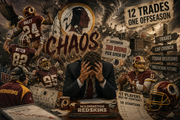
But while the public saw a relatively calm offseason on the surface, internally the organization was preparing for what looked like a catastrophic 2007 cap situation. Washington projected to be over the salary cap next offseason with 17 expiring contracts, including 10 starters and five young stars expected to demand massive extensions.
The franchise knew it would not be able to keep everyone.
That realization triggered one of the boldest and most controversial offseasons in league history.
Phase One: Retaining the Core
Washington’s first objective was preserving the foundation of the offense.
Re-Signings
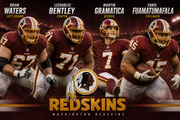
C LeCharles Bentley
5 years — $18.76M ($4.75M signing bonus)
Bentley was considered untouchable internally and securing him long-term ensured the offensive line would continue to be the identity of the football team moving forward.
LG Brian Waters
$13.05M deal ($5.22M signing bonus)
Washington declared Waters match-eligible, gambling that rival teams would hesitate to surrender draft compensation to sign him away. The strategy worked perfectly, allowing the Redskins to retain one of the league’s better guards on a surprisingly manageable deal.
K Martin Gramatica
3 years — $6.0M ($1.2M signing bonus)
Gramatica’s consistency earned him another contract as Washington prioritized stability on special teams.
FB Chris Fuamatu-Maʻafala
3 years — $8.05M ($1.86M signing bonus)
The Redskins remained committed to physical football, and retaining their starting fullback reinforced their intention to continue building around the running game.
Minor Releases
Washington quietly moved on from several depth players deemed expendable:
LT Spriggs
QB Symons
CB Westbrook
All three were viewed as surplus to requirements as the roster evolved.
Free Agency Additions
With most of the core retained, Washington focused on targeted veteran additions before the draft.
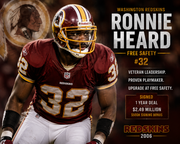
FS Ronnie Heard
1 year — $2.49M ($500K signing bonus)
Free safety had become a serious weakness during the injury chaos of 2005, forcing seventh-round depth player Johnson into major snaps. Heard immediately upgrades the position across nearly every category while also bringing veteran leadership to the secondary.
The move was never about securing a long-term answer. It was about stabilizing the back end of the defense.
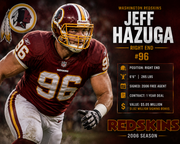
RE Jeff Hazuka
$5.05M deal ($1.02M signing bonus)
Washington wanted more physicality and athleticism at right end after seeing regression from Rucker and virtually no return from Renaldo Wynn’s bloated contract.
Hazuka offers raw power and explosiveness but remains highly inconsistent mentally. His awareness issues likely limit him to rotational duties early, though his arrival gives Washington flexibility to potentially move on from one or both veteran contracts in the future.
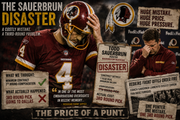
The Sauerbrun Disaster
What had been a disciplined offseason nearly derailed entirely over a punter.
In one of the most embarrassing front office mistakes in recent memory, Washington pursued Dallas match-eligible punter Sauerbrun believing the compensation attached to the contract would only cost a seventh-round pick.
Instead, due to a catastrophic oversight by the organization, Washington will surrender a third-round selection.
The mistake infuriated ownership and intensified scrutiny on head coach Gardiner and the football operations department. While the British coach had earned respect for stabilizing the franchise to an 8-8 season despite devastating injuries, this blunder reopened questions about whether the organization truly had control behind the scenes.
Little did fans know, the real chaos was still to come.
Getting Ahead of the Cap Crisis
As the offseason progressed, Washington’s front office began aggressively planning beyond 2006.
The numbers were impossible to ignore:
17 players out of contract in 2007
10 starters approaching free agency
5 young cornerstone players due major extensions
projected salary cap problems looming
Rather than waiting for the situation to explode, Gardiner chose to attack the issue proactively while key veterans still held enormous trade value.
The result became known around the league as:
“Gardiner’s Trade Extravaganza”
In total, Washington completed 12 trades before the draft, fundamentally reshaping the future of the franchise.
By the end of the process, the Redskins somehow emerged holding:
4 picks inside the Top 60 of the 2006 Draft
3 first-round picks in 2007
2 second-round picks in 2007
1 third-round pick in 2007
But the price paid was staggering.
The Major Trades
P Brian Moorman → Denver Broncos
Received: 4th-round pick
Purely a financial move. Moorman had performed excellently during his lone season in Washington, but the organization could not justify specialist money given the coming cap crunch.
Washington later maneuvered around the board to turn the value into multiple late selections for developmental depth.
TE Jason Witten → Breck
Received: 1st-round pick + two 3rd-round picks
One of the first true blockbuster deals of the offseason.
Witten reportedly informed Washington he would seek a massive extension at the end of his contract, and the Redskins decided immediately they would not be the team paying it.
Former champions Breck paid heavily to secure one of the league’s elite tight ends.
CB Champ Bailey → Philadelphia Eagles
Received: CB Marlin Jackson + two 1st-round picks
The trade that shocked football.
Washington traded arguably the best cornerback in the league to a divisional rival — not because Bailey wanted out, but because Philadelphia’s offer was viewed internally as impossible to refuse.
Marlin Jackson arrived as a talented young replacement, while the additional two first-round picks dramatically expanded Washington’s flexibility moving forward.
Fans were furious.
League executives were stunned.
But the Redskins believed this move could redefine the franchise long term.
DE Ty Warren → Kansas City
Received: Future 1st-round pick
Fresh off breaking the franchise single-season sack record, Warren was moved before extension talks could become unavoidable.
The Redskins knew retaining every young star on the roster was financially impossible. Warren became another difficult sacrifice in exchange for future sustainability.
QB Patrick Ramsey + 1st + 3rd → new england
Received: QB David Garrard
Perhaps the most divisive move of the offseason.
Gardiner clearly lost confidence in Ramsey’s durability after three injury-riddled seasons and chose not to gamble another year on his health.
Garrard brings improved awareness and accuracy, but many around the league viewed the compensation as excessive for what appears to be only a moderate upgrade.
This trade may ultimately define Gardiner’s tenure.
S Milligan → Denver Broncos
Received: Two 1st-round picks
Once rival organizations realized Washington was willing to sell premium talent, the offers intensified.
Denver eventually pried away star safety Milligan with another massive package of draft capital.
Washington reluctantly accepted, further sacrificing present-day talent in exchange for future flexibility.
Backup Guards → Atlanta Falcons
Received: 5th-round pick
A small housekeeping move involving two young reserve guards who likely would not have been retained beyond the season.
Gardner + Improved Pick Package → WR Laveranues Coles
If the Sauerbrun situation was the biggest mistake of the offseason, this move may have been second.
Washington believed its cap situation was healthier than reality and aggressively moved to acquire Coles. While he upgrades the receiving corps significantly, the contract attached to him now looks dangerously expensive for a team already staring down future financial problems.
Insurance Guard Trade with Pittsburgh
Before Brian Waters officially re-signed, Washington prudently secured veteran insurance at left guard by moving down a draft round in a deal with Pittsburgh.
Once Waters returned, the acquisition became more about depth and injury protection.
Raiders Pick-Swap Deal
A straightforward move designed to shift mid-round draft assets into future capital as part of Washington’s long-term restructuring strategy.
Detroit Lions Trade-Up Deal
Received: Three 2nd-round picks
The final move before the draft.
Detroit aggressively pushed into the first round, while Washington once again maximized value by expanding its growing stockpile of premium Day 2 selections.
Final Assessment
This offseason may ultimately be remembered as one of two things:
Either the moment Washington finally escaped years of reckless cap mismanagement…
Or the moment the franchise tore apart a contender before it ever had the chance to fully develop.
Gardiner and the front office made an enormous gamble:
sacrificing stars before contract chaos hit,
embracing future flexibility over short-term comfort,
and trusting their scouting department to rebuild the roster through the draft.
The backlash has been fierce. Losing names like Champ Bailey, Jason Witten, Ty Warren, and Milligan in a single offseason risks alienating a fanbase already unsure about the direction of the organization.
But internally, Washington believes standing still would have been fatal.
The Redskins now head into the 2006 Draft armed with one of the largest collections of premium draft capital the league has seen in years.
Now comes the hard part.
They have to get the picks right. |
|
Forum Discussion
(by S_Gardiner on 05/07/2026)
|
Replies - 3 :: Views - 18 |
|
redskins season 05 review |
The Washington Redskins 2005 season was one of those classic “better than it looks on paper” campaigns,an 8–8 finish, but with clear progress and a lot of adversity baked in.
QB carousel ramsey started season and led the skins to a 4-1 record ,when he went down ty branyon wasnt afraid to air it out until he went down,when qb3 came in he statwise performed the best,but with none of these guys excelling the instability at quarterback is definately holding this franchise back
HB ladell betts continues to be the workhose as he notched up his 3rd straight 1000 season if we can work out a passing game this will only help betts production,toefield was a solid back up considering his attributes and quite often found space in between the tackles.
FB fuamatumafala solid if unspectacular for a run heavy team he we was running through walls for us.
WR group new signing northcutt turned out to be our best player and broke franchise records in receiving yards in between running back kick returns,rookie braylon edwards got himself a franchise record with 58 recptions but he got another record with most drops in a season with 10.
TE witten does what he does another 50+catch season another 500+ yards a great player who i believe will get even better.
OL as we knew already from resources invested in this group,they were one of the best in the league
LE warren got 12 sacks and broke franchise record,didnt get alot of help from other DES but intyerior trandem dockett and oghobaase looked to have devloped a good partnership and the future looks good.
LB core pace,trotter and arrington as we know a great group that compliments each other well,as the well documented cap situationlooms how long we can keep this group together who knows.
CB with champ,smoot and asomugha along with promising project mcfadden manning the corners except the buffalo game we are happy with the play of this group,and safety milligan was great alongside 7th round johnson.
ST with gramatica and moorman we had a special teams duo to match any if the league
Week 1 vs New York Jets (12–7 win)
This was a pure defensive grind. Washington’s defense set the tone for the season—physical, opportunistic, and capable of carrying games when the offense stalled.
Week 2 vs Atlanta Falcons (23–20 win)
As you said, it felt more controlled than the score suggests. Washington managed the game well and showed more offensive balance, even if it wasn’t explosive.
Week 3 vs New York Giants – Win, but warning signs
Washington moved to 3–0 but were outplayed for long stretches,the defence bailed them out again as offence looked limited
Week 4 vs New England Patriots – Reality check (15–3 loss)
This was where things started to catch up:
Defense actually held up reasonably well against Tom Brady and company
But the offense just couldn’t function
Only 3 points tells the story,no rhythm, no explosiveness
It exposed a key issue: if the defense didn’t dominate, Washington had no way to win.
Week 5 vs Philadelphia Eagles – Costly win,probably one of the most pivotal moments of the season,losing ramsey was huge,even though ramsey hadnt been great,this just deepened the QB instability
week 6 Tampa Bay Buccaneers lost 24-11 the branyon era started with him not being afrain to push ball downfield but being injury prone
Week 7 vs Buffalo Bills – Heavy loss, but not a collapse,This one’s interesting because the scoreline flatters Buffalo:
Washington actually controlled tempo and possession,limited running game.but speed on the outside exposed secondary and the big plays over the top changed the game
Week 8 vs Dallas Cowboys Outclassed by a contender
Against Apolos Cowboys this was a step too far,Washington couldn’t keep up with a more complete team,defence was stretched offence was inconsistant,this felt more like gap in quality than bad luck
Week 9 vs Seattle Seahawks – Self-inflicted loss (27–13)Arguably one of the most frustrating games,won time of possession and outgained seattle but 7 penalties and 3 turnovers,this combination makes it impossible to overcome and perfectly sums up our season,doing enough to win then undoing it.
week
week 11 w vs caroline panthers after weeks of nearly performances this was finally the breakthrough we finished drives,cut out mistakes and closed things out properly.
week 12 loss vs miami doplhins 20-13 this was our lowest point as we were outplayed by struggling opponent,we looked disjointed with low energy these are the games good teams dont drop.
week 13 38-0 vs the saints this week totally the opposite,near perforect execution this showed what could happen when everything aligns
week 14 followed the saints game with another good performamce 37-7 vs giants to sweep them this year
week 15 defeat to the cowboys 26-21 we played them tough and kept it competitive but again just lacked that edge to finish
week 16 loss to chicago again we under performed and mad ethe opposition look better than they were
week 17 win to sweep eagles as well 18-17 typical gritty end to the season defence plays tough offence does just enough |
|
Forum Discussion
(by S_Gardiner on 04/29/2026)
|
Replies - 0 :: Views - 5 |
|
At A Glance
| INJURY REPORT |
| PLAYER |
POS |
OVR |
LENGTH |
 Joseph Addai |
HB |
81 |
6 weeks |
| NFC East |
| RNK |
TEAM |
W-L-T |
PCT |
DIV |
| #10 |
 y-Eagles |
10-6-0 |
0.625 |
6-0 |
| #26 |
Redskins |
6-10-0 |
0.375 |
3-3 |
| #29 |
 Giants |
3-13-0 |
0.188 |
2-4 |
| #31 |
 Cowboys |
3-13-0 |
0.188 |
1-5 |
| REDSKINS SCHEDULE |
| Preseason |
| WK |
DATE |
OPPONENT |
SCOUT/RESULT |
| Regular Season |
| 1 |
Sun |
vs  Dolphins #25 |
|
| 2 |
Mon |
at Eagles #10 |
|
| 3 |
Sun |
vs Giants #29 |
|
| 5 |
Sun |
vs  Lions #30 |
|
| 6 |
Sun |
at  Packers #1 |
|
| 7 |
Sun |
vs  Cardinals #23 |
|
| 8 |
Sun |
at  Patriots #4 |
|
| 9 |
Sun |
at  Jets #21 |
|
| 10 |
Sun |
vs Eagles #10 |
|
| 11 |
Sun |
at Cowboys #31 |
|
| 12 |
Sun |
at  Buccaneers #18 |
|
| 13 |
Sun |
vs  Bills #6 |
|
| 14 |
Thu |
vs  Bears #19 |
|
| 15 |
Sun |
at Giants #29 |
|
| 16 |
Sun |
at  Vikings #5 |
|
| 17 |
Sun |
vs Cowboys #31 |
|
|